When accuracy and precision aren't enough: What the modern food and feed laboratory actually demands
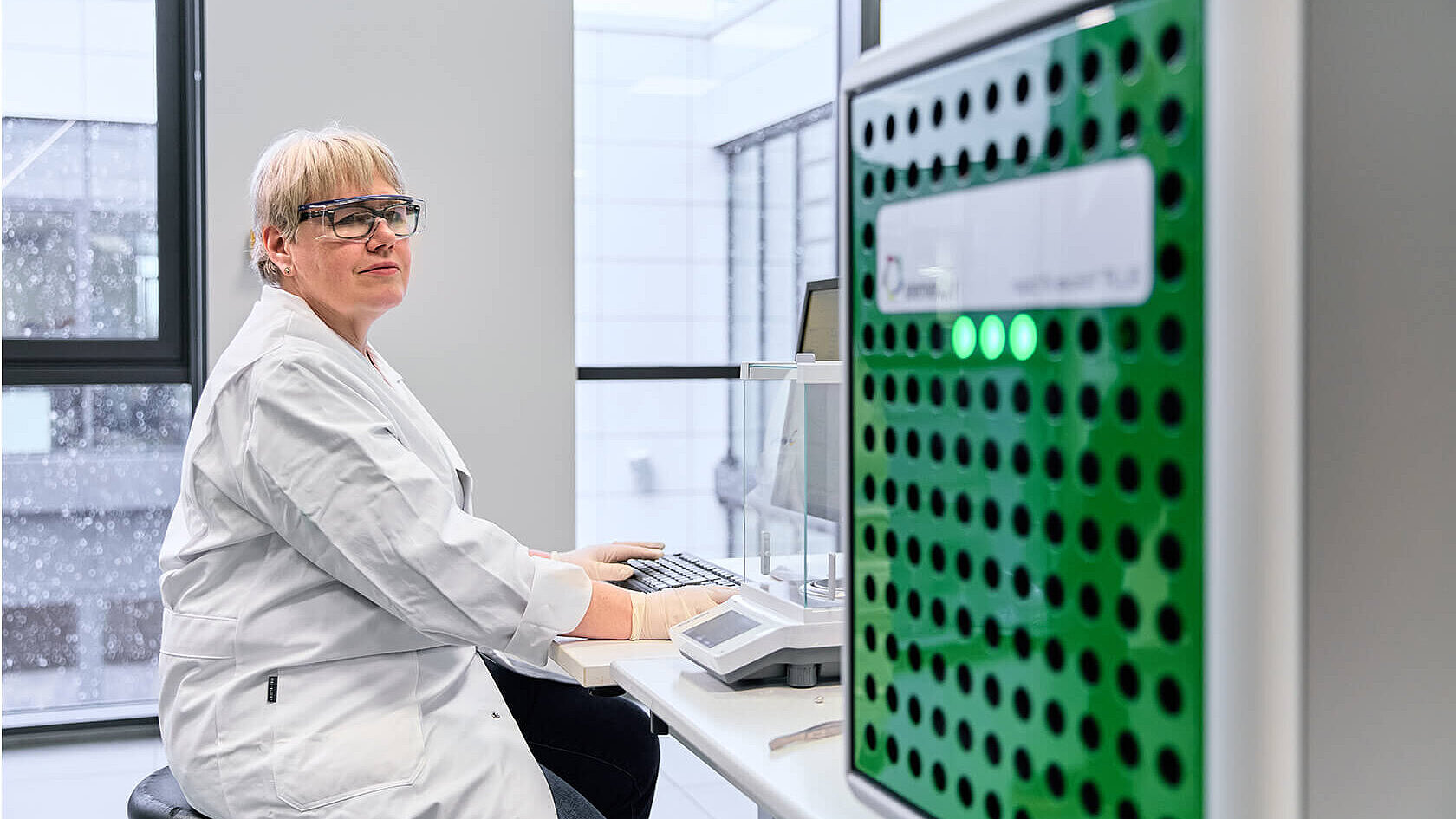

Today's food and feed laboratories operate in an increasingly demanding analytical environment. Sample volumes are growing, regulatory requirements are tightening, and lab technicians are often expected to run several analyzers at once. In this environment, an instrument needs to do more than deliver accurate results — it needs to fit into real workflows, run by people who may not have years of instrument-specific training.
Nitrogen and protein analysis is one of the most routine and commercially critical measurements in food, feed, and agriculture. It is also one of the areas where the gap between what older instrumentation was designed for and what modern laboratories actually need has become visible. These were the conversations driving the design when we developed the nitrogen and protein analyzers of the exceed PLUS series, which operate according to the Dumas combustion method.
Why nitrogen and protein analysis matters
Nitrogen and protein are foundational parameters across a wide range of industries, for reasons that are both practical and regulatory. In agriculture, nitrogen measurements provide critical information on soil fertility, enabling more precise nutrient management and supporting yield optimization. In food and feed production, protein content — derived from nitrogen measurement — is a core nutritional value with direct implications for labeling compliance, product quality, and in sectors like dairy, commercial pricing throughout the supply chain.
As global food security concerns intensify, and regulatory standards become more stringent across more regions, accurate and efficient nitrogen and protein analysis will only grow in importance. It sits at the heart of quality control at every stage: incoming goods inspection, formulation development, production control, outgoing goods control and labeling.
Rethinking analysis methods for today’s laboratory environment
The Kjeldahl method has long been regarded as the reference standard method for nitrogen quantification across many sample matrices. But as demands for faster turnaround times, higher sample throughput, and improved laboratory safety grow, many facilities are re-evaluating traditional workflows. Where Kjeldahl requires hazardous reagents, fume hood infrastructure, and analysis times of around 90 minutes for both a complete batch - or even only for a single sample - the Dumas approach works fundamentally differently in day-to-day use.
In nitrogen and protein determination according to Dumas, a sample is introduced into a high-temperature furnace and combusted in an oxygen-rich environment, converting organic nitrogen into nitrogen oxides. These are reduced to molecular nitrogen (N₂), while sulfur, chlorine and excess oxygen are removed and water is trapped. The resulting gas stream is measured by a thermal conductivity detector and processed to determine nitrogen content. A typical cycle takes around four to six minutes per sample.
There are no hazardous reagents, no liquid waste streams requiring special disposal, and no need for continuous operator attention. With an automatic sample feeder, a batch can simply be loaded and left to run. The method isn’t just faster - it enables a more automated, lower-maintenance workflow with less routine operator involvement. In addition, the Dumas combustion method has a significantly smaller resource footprint than wet-chemistry approaches such as Kjeldahl.
The real pain points in modern labs
Accuracy and precision in nitrogen and protein analysis are well established and non-negotiable. They are a baseline expectation and are validated for both the Kjeldahl and Dumas method in numerous ring tests and studies. For example, a recent study by the French dairy organization CNIEL, comparing analysis results of approx. 350 dairy samples, found a high level of agreement between the Dumas and Kjeldahl methods across all evaluated dairy products.
When we talk to laboratories today, the challenges they describe are different: How do we maintain throughput when trained personnel leave and new staff must be onboarded? How do we reduce complexity for less experienced operators without sacrificing result quality? How do we minimize hazardous materials from our workflows? And how do we keep the cost of ownership manageable over the long term?
These are the questions that shaped the design of the Dumas-based exceed PLUS analyzers. Beyond the inherited benefits of the Dumas method, the instruments are built to be robust and intuitive - systems where users with different skill and experience levels can generate reliable results, enabling consistent performance across a broader range of users and laboratory environments. In practice, sample throughput is decided less by raw cycle time of a single analysis than by two factors: how much of the sequence is actually available for real samples rather than calibration or run-ins, and how much operator time is tied up by maintenance work.
To further increase productivity, instrument interaction has been significantly reduced in the exceed PLUS analyzers, resulting in measurable throughput advantages. Because calibration is long-term stable and matrix-independent, laboratories can run the most diverse sample matrices directly one after another in the same sequence, without pausing to recalibrate for each matrix type. In practice, this means fewer autosampler positions are tied up by calibration standards and reference checks, leaving more positions free for actual samples. The result is more real measurements per run.
The second lever is maintenance. Unlike measurement, which can run unattended once a batch is loaded, maintenance and daily run-in routines require the operator to be physically present at the instrument. This is exactly why their speed and simplicity matter: every minute spent on a complex startup or maintenance step is a minute the lab technician cannot spend elsewhere. Laboratories using exceed PLUS analyzers benefit from up to 60% fewer maintenance interventions compared to the previous instrument generation, combined with a fast, straightforward daily run-in routine, reducing exactly the kind of attended downtime that limits how much a lab can get out of an instrument.
At the same time, the cost per sample has been reduced significantly, helping laboratories lower operating expenses without sacrificing analytical performance. These savings come from several factors, including lower consumables consumption and longer maintenance intervals. In addition, the use of argon or CO₂ as cost-effective carrier gas alternatives to helium gives laboratories greater independence from volatile helium markets and helping protect them from rising helium costs.
Matching the instrument to the lab
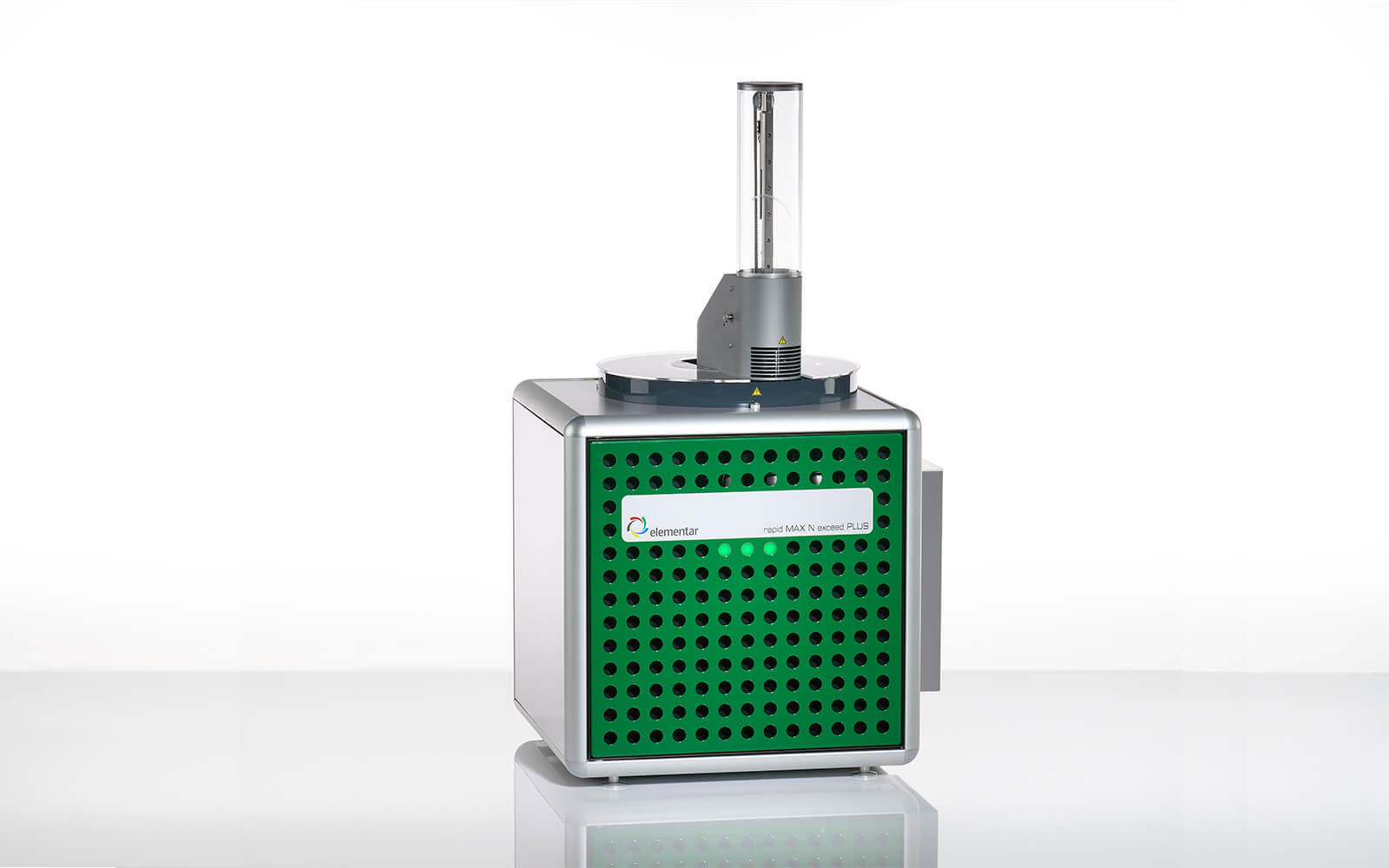
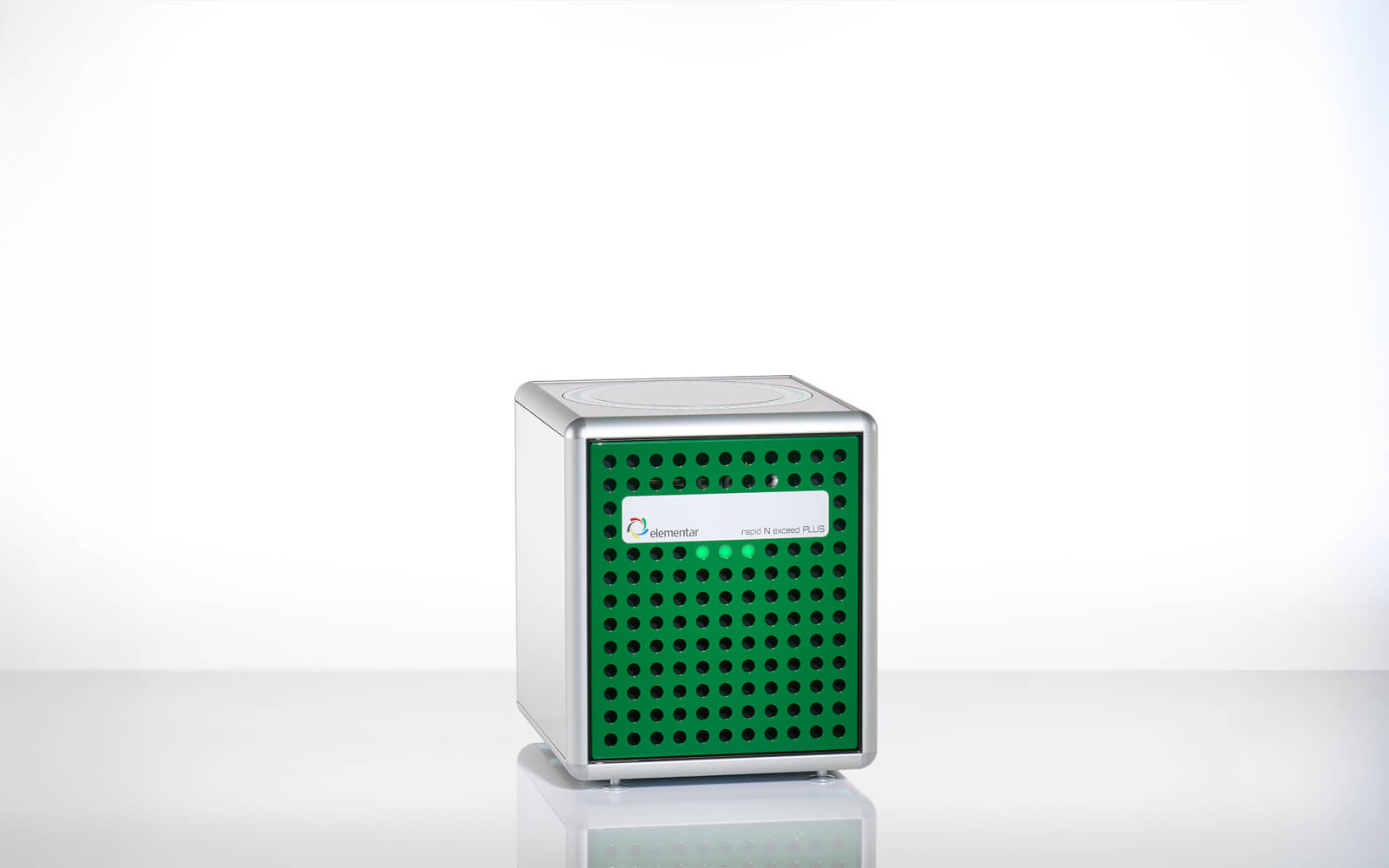
The exceed PLUS series includes two analyzers - the rapid MAX N exceed PLUS and the rapid N exceed® PLUS - each optimized for different priorities in terms of throughput, automation, and cost of ownership.
Choosing between them comes down to a few practical questions: How many samples does the lab process, and how often? What range of sample types needs to be covered — liquids like milk and beverages, dry solids like grains and powders, or more complex matrices like creams, yogurts, and high-salt samples? How much automation is needed to reduce manual preparation time? And what are the realistic budget constraints, both upfront and over the instrument's lifetime?
In this context, the rapid MAX N exceed PLUS with helium or argon as carier gas options is ideally suited for applications requiring maximum sample flexibility and high-throughput unattended operation, supported by user-friendly crucible technology that minimizes the need for sample preparation.
For laboratories prioritizing the lowest possible total cost of ownership while maintaining high analytical performance, the rapid N exceed® PLUS provides an optimal solution. By utilizing CO₂ as a cost-efficient carrier gas and reducing consumable consumption, the system achieves a particularly low cost per sample.
Where the exceed PLUS analyzers make the most difference
The primary application areas for the exceed PLUS series are those where high-throughput, accurate protein analysis is both operationally critical and commercially sensitive: dairy, grains, animal feed, alternative proteins, ingredients, and the broader food and beverage sector. Regulatory compliance and quality assurance in these industries depend on consistent, traceable nitrogen determinations at every stage of the production chain.
The analyzers are also well-suited to starch production, where detecting very low nitrogen concentrations is analytically demanding, and to chemical industries including polymers, plastics, and rubber, where nitrogen content is an important quality parameter.
The series is also the solution for laboratories that no longer want their operations tied to helium's shortage and price volatility: the rapid MAX N exceed PLUS offers the option to run on argon as an alternative carrier gas, while the rapid N exceed® PLUS operates on CO₂, giving labs across all of these industries a way to decouple their analytical throughput from a supply chain they don't control.
Looking ahead
Two pressures will keep shaping nitrogen and protein analysis over the next few years. The first is staffing: skilled analytical chemists are harder to hire and retain than they used to be, and labs increasingly need instruments that produce reliable results in the hands of whoever is available that shift, not just whoever has the most training. This is pushing laboratories toward systems with greater intelligence, connectivity, and ease of operation, where hardware and software are tightly integrated and operation requires minimal specialist intervention. Calibration that holds steady across matrices and maintenance routines that take minutes rather than hours are not incremental conveniences here - they are what determines how many samples a lab can actually process in a day, regardless of how fast a single measurement runs, freeing laboratory staff to focus on data interpretation rather than instrument management. The second is helium: as supply remains tight and prices stay volatile, carrier gas choice is turning from a footnote into a genuine procurement criterion.
The exceed PLUS series represents a meaningful step in that direction. It does not ask laboratories to choose between performance and usability, between throughput and safety, or between analytical capability and sustainability. In a field where the demands on analytical labs are only growing, that kind of instrument design matters.
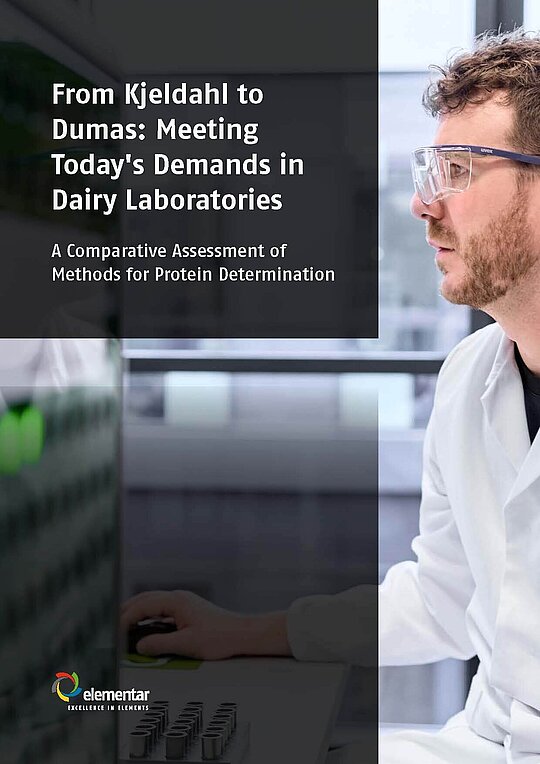
From Kjeldahl to Dumas:
Meeting Today’s Demands in Dairy Laboratories
Learn how dairy laboratories can achieve reliable results while increasing throughput, improving safety, and reducing operational workload in this comparative assessment of methods for protein determination.
DOWNLOAD YOUR COPY
Fill in the form to receive your download link per e-mail.
Your contractual consideration for the free provision of the download is the subscription to our personalized newsletter. By clicking on the “download now” button, you therefore declare your acceptance of the receipt of personalized newsletters by e-mail by Elementar Analysensysteme GmbH and its group companiesas well as the evaluation of your user behavior in this regard and - if available - the merging of this data with your data in our customer database.
In order to receive newsletters from our group companies, it is necessary to transfer your above-mentioned personal data to these companies. We point out that these are partly located in so-called unsafe third countries outside the EU/EEA, in which no adequate level of data protection (e.g. by adequacy decision of the EU, Art. 45 GDPR) is guaranteed. In these countries, you may not be able to enforce your rights as a data subject, or only to a limited extent. In addition, it is possible that local government agencies access your data to a disproportionate extent. The data transfer is based on Art. 49 para. 1 lit. b) GDPR.
You are aware that the subscription to our personalized newsletter represents the contractual consideration that you provide for the free provision of the download. You can unsubscribe from the newsletter at any time with effect for the future. You can object to the future use of your data for advertising purposes at any time. For further information, please refer to our privacy policy.
Do not miss any new articles
NEWSLETTER
We will constantly publish new blog articles. Register for our newsletter to stay up-to-date and get informed about latest blog articles, news and trends.