Biochar is a Game Changer

From ancient Amazonian soils to cutting-edge concrete, biochar is gaining ground as a powerful tool in the fight against climate change.
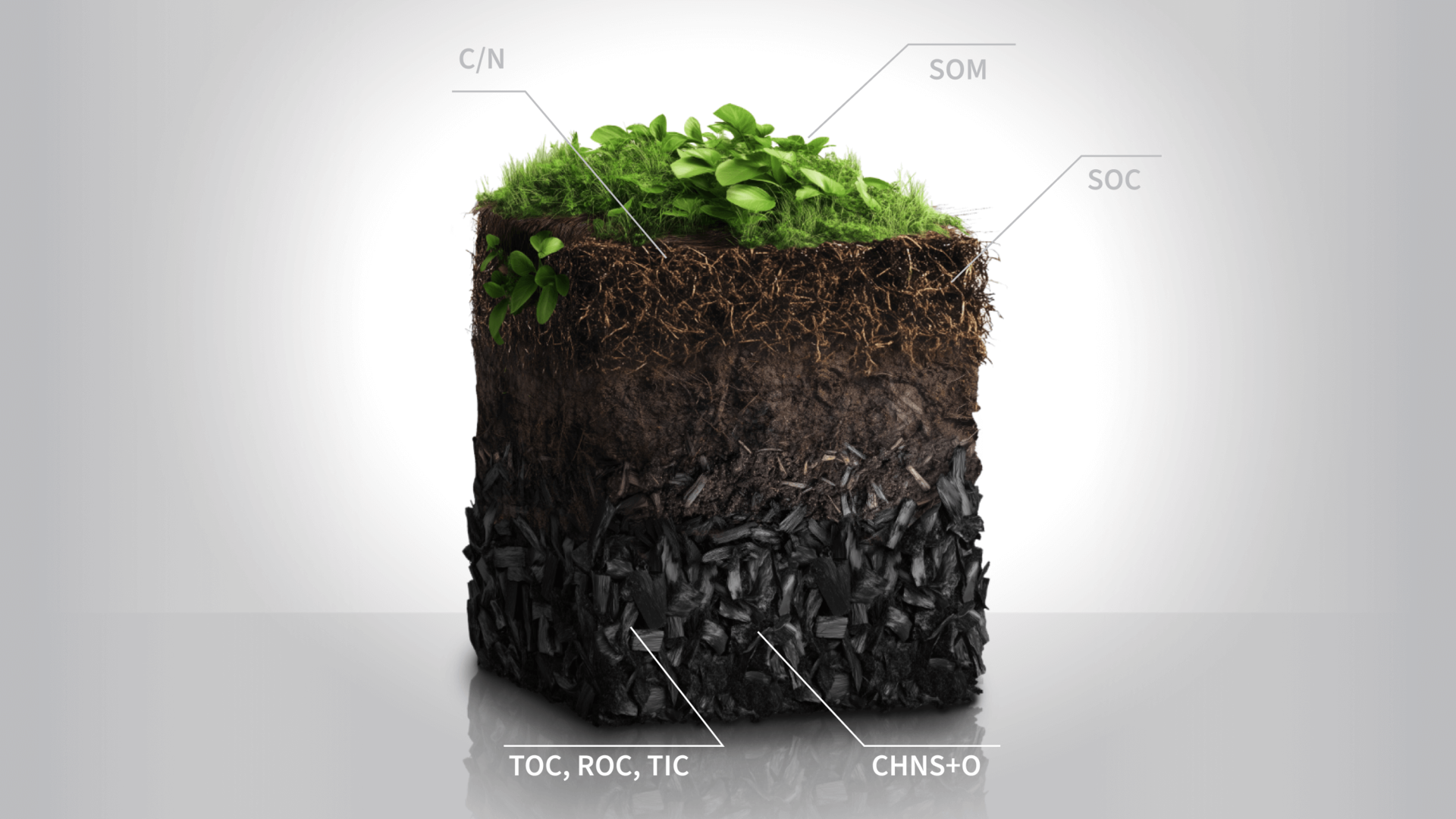
Essentially, biochar is a carbon-rich material produced via pyrolysis, the process of heating biomass (such as wood chips, agricultural residues, or manure) in oxygen-limited conditions to yield a stable charcoal-like substance. Biochar is considered carbon negative because it removes more carbon dioxide from the atmosphere than it emits during production. It traces its roots to the ancient terra preta soils in the Amazon basin, where indigenous practices enriched infertile soil with charcoal and organic waste, resulting in soils of remarkable fertility that persist even today.
Unlike traditional charcoal, biochar is designed with specific properties for targeted applications: from improving soil fertility to enhancing building materials and supporting the circular economy. When applied to soils, you often see benefits like better water retention and less need for synthetic fertilizers. The combination of durable carbon storage plus practical gains explains why biochar has been getting so much attention lately.
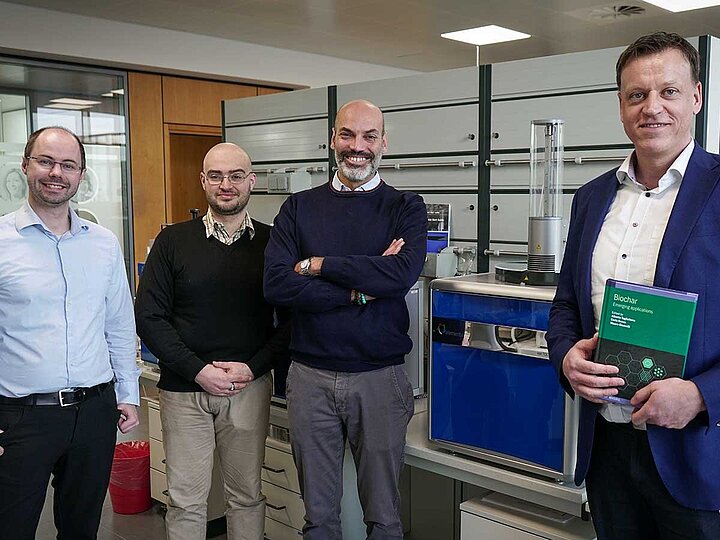
One of the leading voices in this area is Dr. Mauro Giorcelli, Associate Professor at the Politecnico di Torino and board member of the Italian Biochar Association (ICHAR).
A material scientist by training, Dr. Giorcelli has spent over a decade studying how biochar can be engineered for highvalue applications, including polymer composites, coatings, filtration systems, and low-carbon construction materials.

His research bridges the laboratory and the real world, applying rigorous elemental analysis, such as CHNS+O testing and thermogravimetric analysis (TGA) to understand what makes a particular biochar suitable for a given use, whether it’s in soil, cement, or industrial products. He is especially vocal about ensuring standards and transparency, which he sees as crucial to unlocking serious investment and climate credibility.
We spoke with Dr. Giorcelli about biochar’s potential, its pitfalls, and why he believes it's a cornerstone of the next-generation carbon economy.
Where do you see biochar making the biggest contribution to decarbonization, and what needs to happen for it to grow in scale? What role do carbon credits play?
The value for the climate is straightforward: convert biogenic carbon into a stable form and, in many cases, return it to soils. Scaling requires three things: First, reliable feedstock supply chains based on waste, not primary biomass that competes with food or forests. Second, consistent production and process control that delivers the properties you promised. Third, finance. Properly measured and verified, biochar can generate high-integrity carbon credits. That revenue helps farmers and SMEs invest in equipment, training, and quality control, so that projects can graduate from pilots to programs.
The point is to upcycle what’s locally abundant.
Do different feedstocks, say, rice husks versus wood, really change performance?
Very much so. Feedstock governs porosity, surface area, ash, and mineral content. Rice-husk biochar carries more silica and can be interesting in construction additives, while many wood-derived biochars are carbon-rich and shine in soils or filtration because of their high surface area. The point is to upcycle what’s locally abundant. When you match feedstock to end use, you embed biochar in a circular economy rather than shipping uniform products around the world.
You emphasize lab analysis—CHNS+O in particular. Why those elements?
Having precise data on the CHNS+O composition of biochar is essential for verifying its climate benefits. Accurate measurements allow producers, users, scientists, and regulators to confirm the amount of carbon being sequestered and calculate the overall decarbonization impact. This is particularly important in carbon credits and other market-based mechanisms, as it provides the data necessary to prove that biochar is delivering on its promise of removing atmospheric CO₂ and contributing to sustainable practices.
What do ratios like H/C and O/C actually tell us?
A lower H/C ratio generally indicates that biochar is more carbon-rich and less reactive, which means it’s more stable. Low O/C suggests fewer oxygenated functional groups. Put simply: lower ratios, longer carbon lock-up. They’re not the whole story, but they’re excellent screening metrics for batch-to-batch consistency.
In addition to soils, which areas of application are you most excited about?
Construction. The built environment is hungry for decarbonization, and biochar is carbon negative. We see promising work in lightweight concrete and mortars, acoustic and thermal panels, moisture-regulating plasters, even asphalt modifiers. The key is consistency, because the simple act of changing supplier can alter density, water demand, and strength. You need standards, declared properties, and good quality control so a designer can specify biochar with confidence.
We see promising work in lightweight concrete and mortars, acoustic and thermal panels, moisture-regulating plasters, even asphalt modifiers.
Let’s talk risks. What can go wrong, and how do you avoid greenwash?
There are three red flags. The first is using virgin feedstock. Biochar should be made from residues. Second, weak data. No elemental analysis, no TGA. Third, over-claiming. Credits without transparent boundaries or permanence assumptions. The cure is simple if not easy: certified feedstocks, published methods, and independent verification. If you want markets and regulators to trust you, measure properly and make the data traceable.

And the “magic box” you sometimes bring to talks?
It’s a show-and-tell of everyday products containing carbon materials, such as shampoo, face masks, adhesive bandages, pet-care absorbents, plus a sample of biochar-based cement with the same mechanical performance as conventional material but dramatically lower embodied carbon. It disarms skepticism. People realize biochar isn’t exotic and that it’s already in their lives. I often mention black pizza, which uses vegetal carbon, essentially a cousin of biochar.
How does biochar complement other climate solutions?
Reforestation is a good way to capture CO₂. The point I would add is permanence: when you produce biochar and apply it, for example, in soil, it can remain for 100 to 200 years. With trees, the carbon is stored as long as the biomass remains stored. If a tree burns, the CO₂ returns to the atmosphere. So, biochar can complement reforestation by providing a more permanent form of carbon storage when it is produced and applied correctly.
What about producers in lowerincome countries?
Opportunities are real, especially where agricultural residues are burned in the open. Small or modular pyrolizers can turn a pollution problem into a revenue stream, with the added benefit of soil improvement. Certification opens access to credit markets, where revenues can support local priorities, such as schools and health centers, while building skills and jobs at the same time. Technology transfer and fair offtake contracts are key.
Are there any myths you’d like to put to bed?
“Biochar is just charcoal.” It’s engineered charcoal with declared properties and intended end uses. That distinction matters. Second, “biochar fixes everything.” It doesn’t. In soils, it works best as part of a system with good organic matter management, appropriate fertilization, and water stewardship. In construction, it’s an ingredient, not a silver bullet.
What policy signal would unlock the next step?
Clear, harmonized standards and smart procurement. If public projects specify verified low-carbon materials, including biochar-enhanced mixes where appropriate, you create demand that rewards quality. Pair that with consistent rules for measurement, reporting, and verification, and capital will flow.
Looking ahead, what will most shape biochar’s role in a circular, low-carbon economy?
Three things. First, better integration with waste systems by designing pyrolysis around local residues to cut logistics emissions. Second, production that captures useful co-products like heat or syngas to displace fossil energy. Third, cross-disciplinary collaboration so agronomists, chemists, engineers, and policy-makers are solving the same problems. Do that, and biochar moves from niche to necessity.
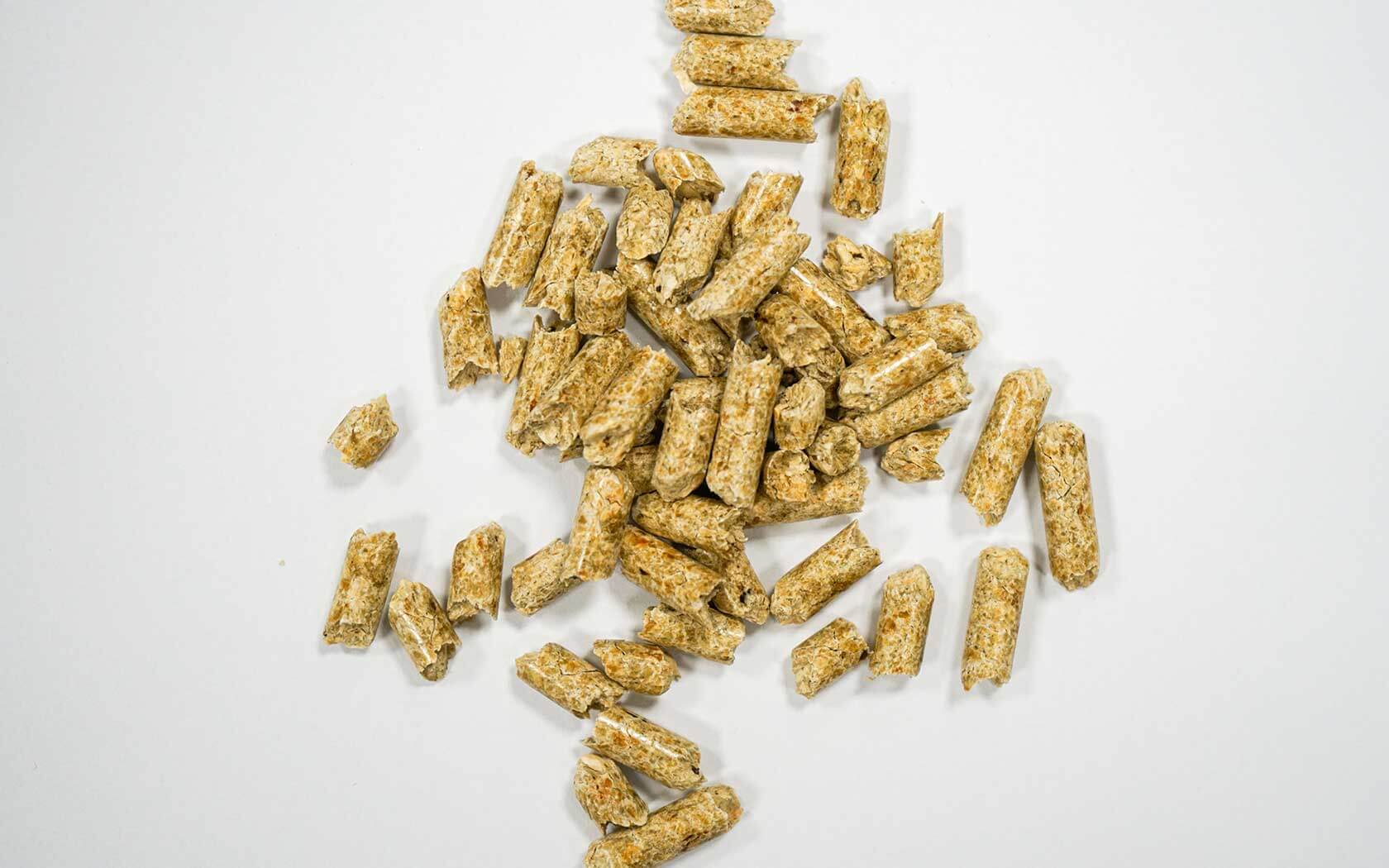
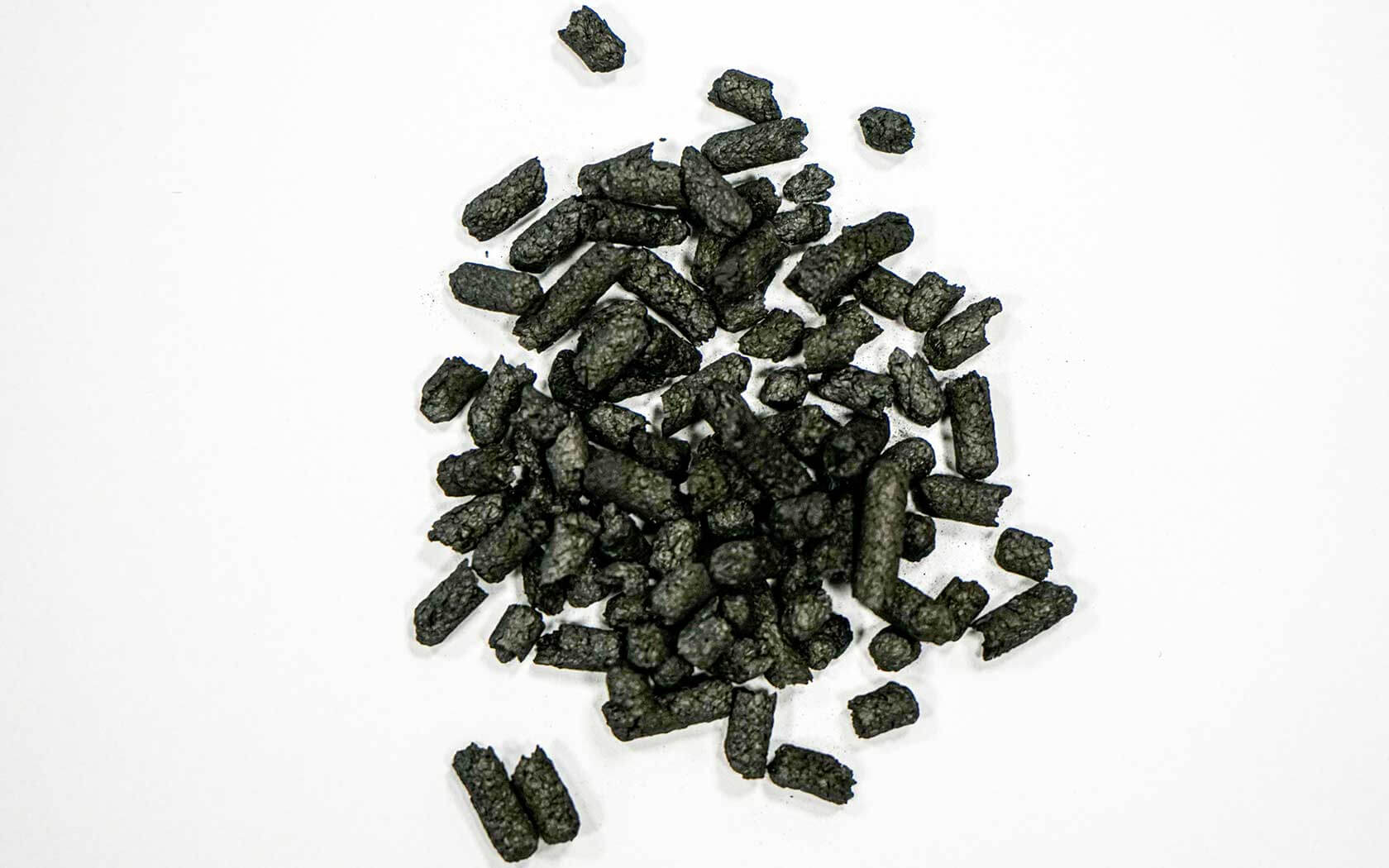
Softwood pellets before (left) and after (right) pyrolysis. When heated in the absence of oxygen, the biomass is converted into biochar.
About
Professor Dr. Mauro Giorcelli
As a leading figure at the Department of Applied Science and Technology at Politecnico di Torino, Professor Mauro Giorcelli combines his expertise in materials science with a deep passion for climate solutions. He serves on the board of the Italian Biochar Association (ICHAR), where he contributes to the development of best practices and regulations for biochar worldwide. At conferences and trade shows, he brings along his “magic box,” filled with everyday products made with biochar—from shampoos and face masks to cement—to show audiences where biochar is already part of daily life.
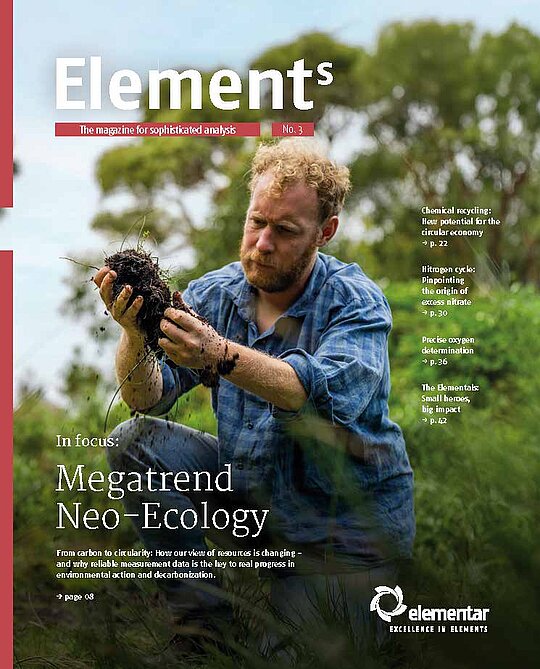
Element's Magazin No 3
In our ELEMENT's Magazin, we cover sophisticated analytical topics and show, how CHNOS elemental analysis, stable isotope analysis (IRMS), TOC analysis, protein analysis according to Dumas and optical emission spectrometry (OES) can be used and how they influence our daily life.
Edition No. 03 on Megatrend Neo-Ecology (Decarbonization, Chemical Recycling, Waste-to-Energy)
DOWNLOAD YOUR COPY
Fill in the form to receive your download link per e-mail.
Your contractual consideration for the free provision of the download is the subscription to our personalized newsletter. By clicking on the “download now” button, you therefore declare your acceptance of the receipt of personalized newsletters by e-mail by Elementar UK Ltd. and its group companies as well as the evaluation of your user behavior in this regard and - if available - the merging of this data with your data in our customer database.
In order to receive newsletters from our group companies it is necessary to transfer your above-mentioned personal data to these companies. The data transfer is contractually required.
You are aware that the subscription to our personalized newsletter represents the contractual consideration that you provide for the free provision of the download. You can unsubscribe from the newsletter at any time with effect for the future. You can object to the future use of your data for advertising purposes at any time. For further information, please refer to our privacy policy.
Do not miss any new articles
NEWSLETTER
We will constantly publish new blog articles. Register for our newsletter to stay up-to-date and get informed about latest blog articles, news and trends.